A Revolution in Alzheimer’s Disease
HCP DSE and Product Launch Campaigns at Biogen
With no change in the treatment landscape for Alzheimer’s disease (AD) in 20 years, the HCP mindset on patient management was frozen in place. Patient profile: elderly, demented, functionally impaired. Treatment plan: mollify late-stage behavioral symptoms such as agitation, combativeness, and wandering.
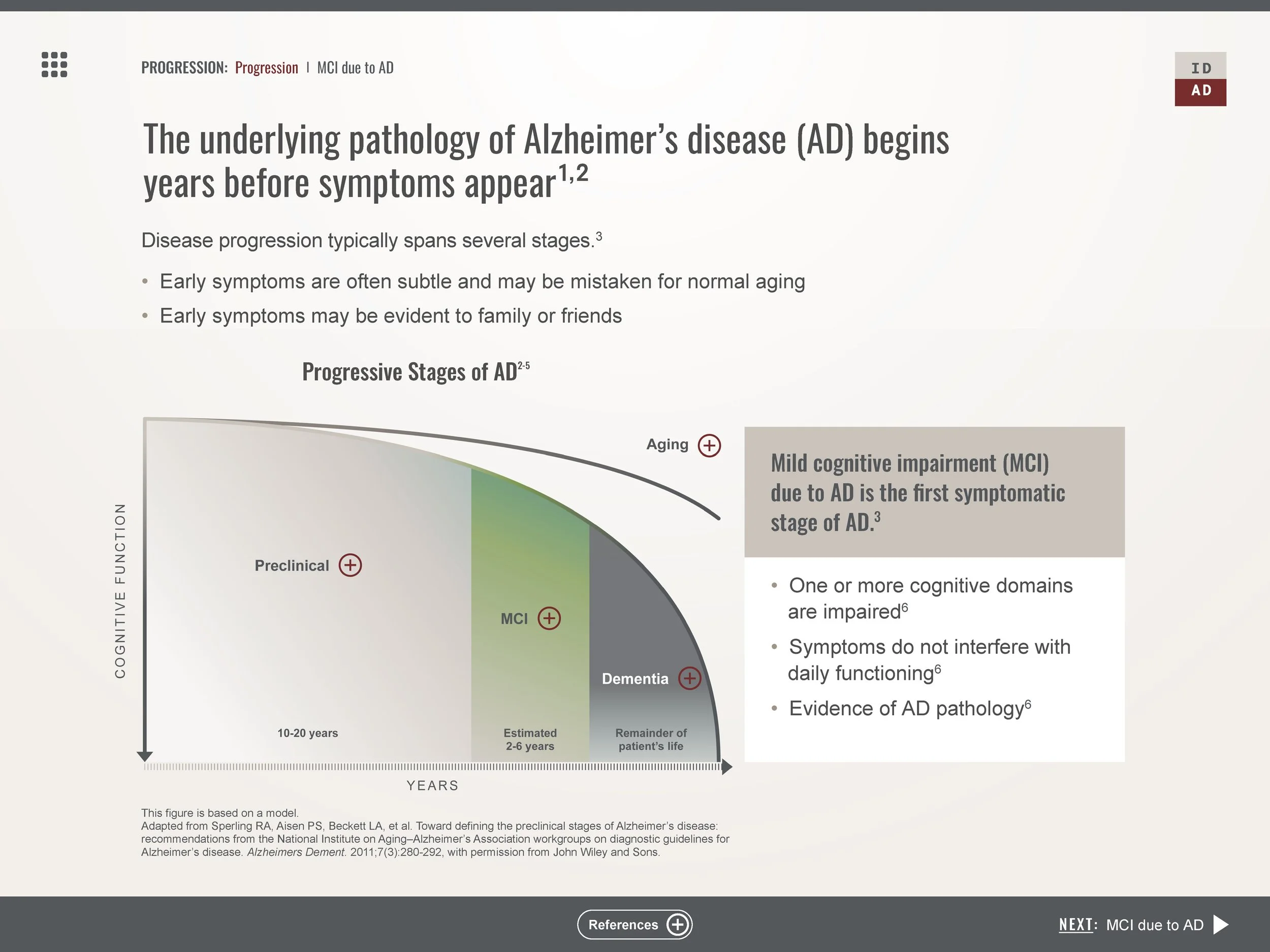
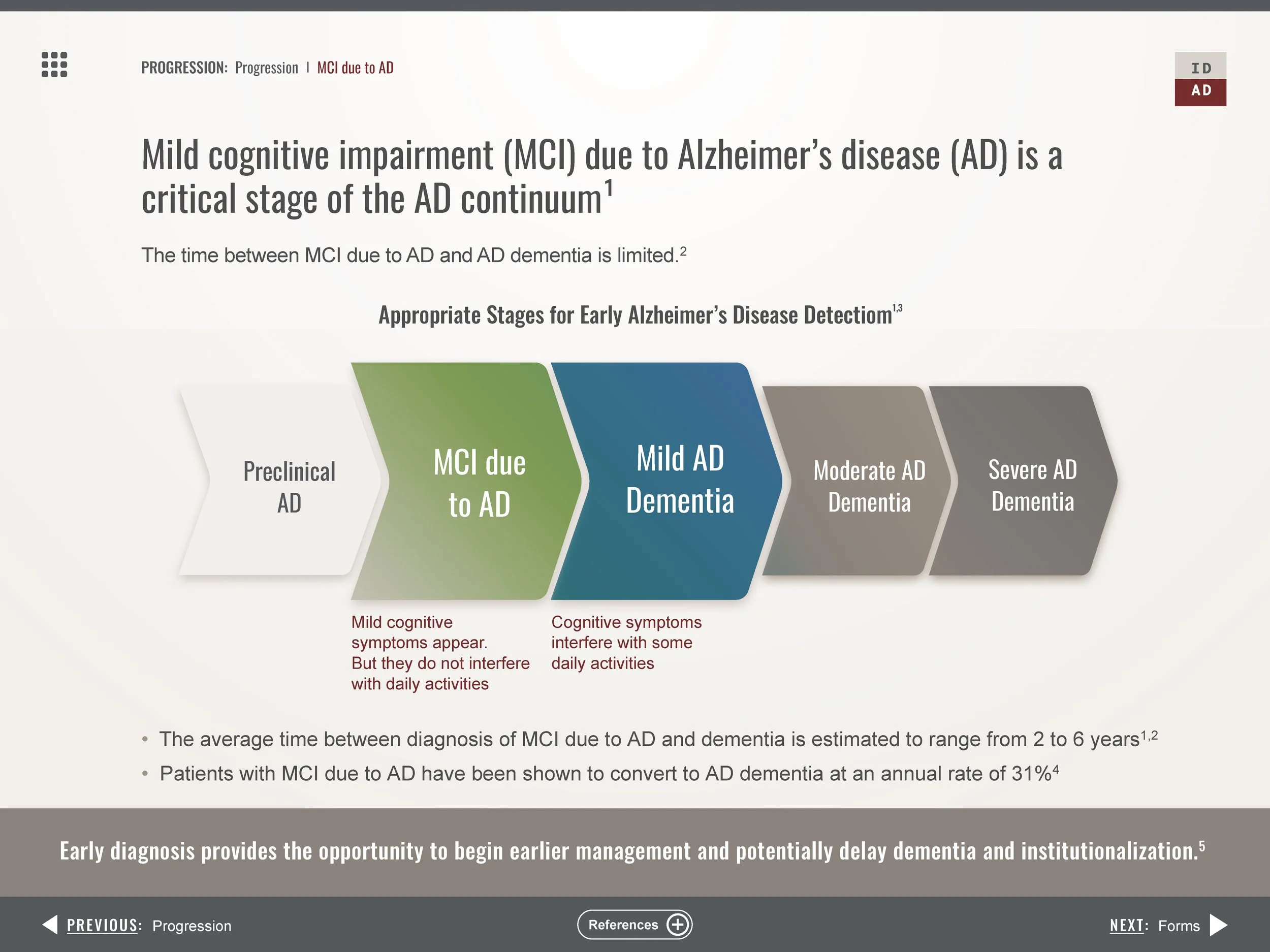
Biogen needed to thaw this mindset because the long winter for AD drug development was about to end. Their revolutionary monoclonal antibody was positioned for a landmark approval in the US and the EU. It would be the first drug to target the underlying pathology of AD, treating patients in earlier stages before the onset of dementia and functional decline, and helping to slow disease progression. But its benefits would require HCPs to adopt a whole new treatment paradigm, starting with when and how to diagnose AD.
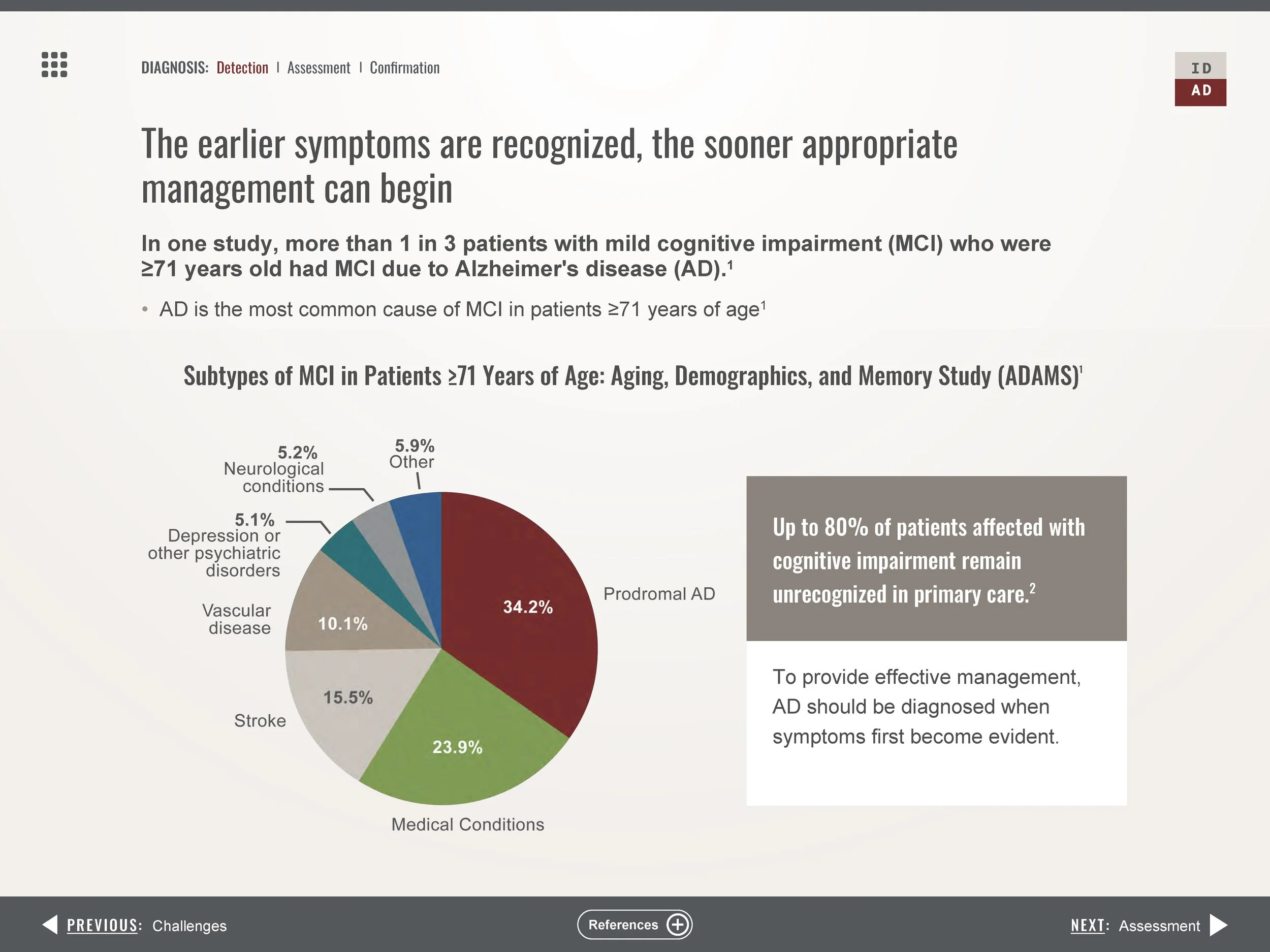
Our solution was IdentifyALZ.com, a robust pre-launch DSE campaign that aimed to literally change the face of AD for HCPs and warm their thinking to the potential benefits of earlier intervention. It introduced the new target patient type: the early-stage patient with mild cognitive impairment (MCI) due to AD. With phased updates and a growing library of downloadable materials and publications, IdentifyALZ.com educated HCPs on:
Progression of AD
Pathophysiology of AD
Challenges of AD
How to detect and diagnose MCI due to AD


We also developed the global and US branded launch campaigns for Biogen’s monoclonal antibody. The campaigns were united by beautiful black-and-white portrait photography that featured new positive faces of AD patients: younger, fully present, and fiercely determined to preserve their independence for as long as possible. In market research, HCPs said our dignified portraits captured patients with MCI due to AD because the eyes and expressions say, I’m still here.
Unfortunately, the branded launch campaigns did not run. Due to controversy with the phase 3 data, the European Medicines Agency refused authorization in the EU, and Medicare denied coverage in the US despite an FDA approval, which was the first US approval in this revolutionary class of AD drugs.